

 See My Latest Article on HelloNation
Is classroom learning or hands-on practice more important?
Both are essential, but they teach different parts of safe and effective massage therapy. Classroom instruction explains anatomy, physiology, contraindications, ethics, communication, and professional standards. Hands-on training develops palpation skills, body mechanics, pressure control, client positioning, and the ability to adjust techniques in real time.
A strong massage education program does not treat these methods as competing choices. It connects them. Students should learn why a technique is appropriate before practicing how to perform it.
For residents of Idaho Falls, ID considering massage certification or a career change, this distinction matters because massage therapy involves more than memorizing routines. It requires sound judgment, careful observation, and consistent practice under supervision.
What does classroom massage training teach?
Classroom training provides the knowledge needed to make informed decisions. It often includes:
- Musculoskeletal anatomy
- Physiology and basic pathology
- Kinesiology and movement patterns
- Massage theory and technique principles
- Hygiene and infection control
- Client intake and documentation
- Professional boundaries and ethics
- Contraindications and precautions
- Business, communication, and legal topics
This material helps students understand what they are touching, how the body may respond, and when a technique should be modified or avoided.
For example, a student may learn that soreness, inflammation, certain medications, recent injuries, or medical conditions can affect how massage should be performed. That information cannot be reliably learned by simply copying hand movements. Classroom study gives the reasoning behind the decision.
Written lessons and discussions also help students prepare for licensing examinations. Idaho massage therapist licensure generally requires completion of an approved education program with supervised coursework and clinic work, along with a nationally recognized competency examination. A student who focuses only on practical routines may be unprepared for the academic and safety portions of that process.
What are the benefits of hands-on massage training?
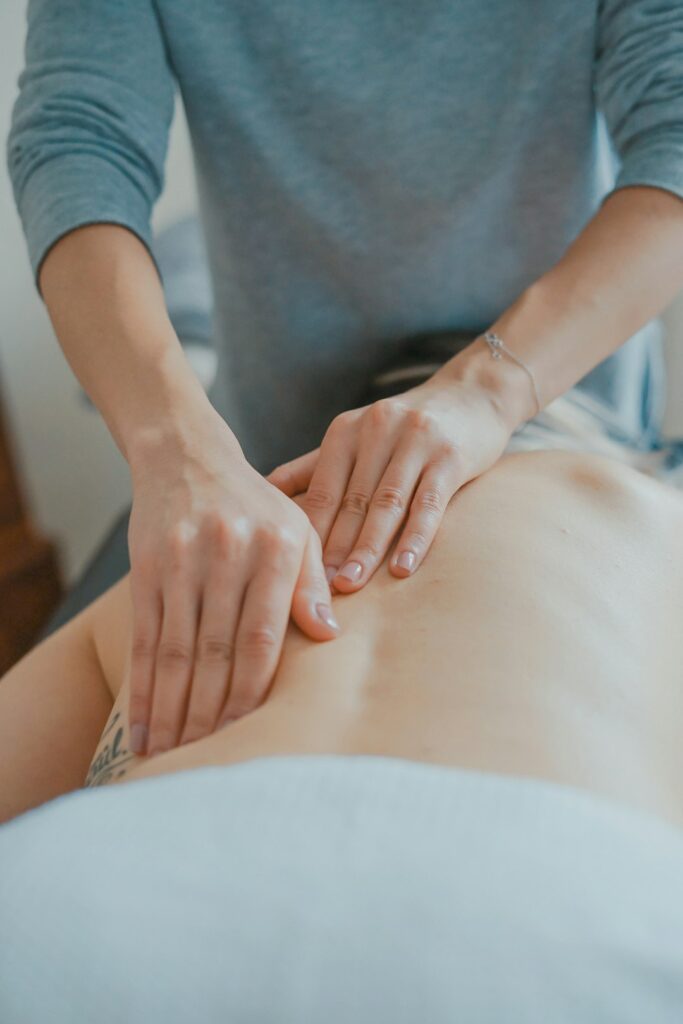
Hands-on practice turns concepts into usable skills. Massage techniques can feel very different when performed on an actual person compared with being demonstrated on a model, diagram, or video.
Supervised practice helps students develop:
- Appropriate pressure and pacing
- Clear draping and positioning procedures
- Efficient hand and body movement
- Palpation and tissue-awareness skills
- Adaptability for different body types
- Comfortable, professional communication
- Recognition of discomfort or guarding
- Safe transitions between techniques
A student may understand the location of a muscle in a textbook but still need repeated practice to locate it accurately through the skin. The same is true of pressure. What feels moderate to one client may feel excessive to another, so practical training teaches students to observe breathing, facial expression, muscle tension, and verbal feedback.
Hands-on education also exposes common mistakes early. Students may discover that they are using too much force, working from an awkward posture, moving too quickly, or neglecting client comfort. Instructor feedback is most useful while the student is actively practicing.
Why is supervised practice different from practicing at home?
Home practice can help with repetition, but it does not replace structured clinical instruction. Friends or family members may provide general feedback, yet they may not recognize unsafe body mechanics, poor draping, excessive pressure, or an inappropriate technique.
A supervised classroom or student clinic adds several protections:
- The instructor can correct technique immediately.
- The session follows established hygiene and privacy procedures.
- The student practices intake questions and documentation.
- The client’s comfort and consent are monitored.
- Techniques can be selected according to the client’s stated needs.
- The student learns how to end a session and provide general aftercare guidance.

This matters in a community where students may eventually work with people who have physically demanding jobs, active outdoor habits, long commutes, or seasonal muscle tension related to cold weather. Those factors do not automatically determine a treatment plan, but they can create useful learning opportunities for assessment and communication.
Can online or classroom-only training prepare someone adequately?
Online coursework can be useful for theory, review, scheduling flexibility, and examination preparation. It may work well for subjects such as anatomy vocabulary, ethics, terminology, and basic physiology.
However, fully classroom-based or online-only instruction has limits for a skill that depends on touch. Students need direct feedback to learn pressure, rhythm, positioning, palpation, draping, and safe contact. A video cannot reliably tell a learner whether the pressure is appropriate or whether the learner’s posture could contribute to strain.
Training that includes remote academic work may still be effective if it provides substantial in-person instruction and supervised clinical practice. The key question is not whether some coursework is online. The more useful question is whether the program offers enough structured, instructor-observed practice to build entry-level competence.
What should prospective students look for in a training program?
Prospective students should compare the balance and quality of both academic and practical instruction. Important questions include:
- Does the program meet Idaho’s education requirements for massage licensure?
- How many hours are spent in supervised classroom and clinic instruction?
- Are instructors available to correct technique directly?
- Does the curriculum cover anatomy, pathology, ethics, hygiene, and communication?
- Do students practice intake, draping, positioning, and documentation?
- Are there clear policies for consent, privacy, and professional boundaries?
- How are students evaluated before working with members of the public?
- Are class schedules realistic for work, family, transportation, and winter travel conditions?
- What costs are included beyond tuition, such as books, supplies, examinations, or application fees?
A program with attractive equipment or a large course catalog is not automatically better. The practical learning environment, instructor supervision, and alignment with licensing requirements usually deserve more attention.
Which learning style suits different students?
Students who prefer reading, note-taking, and organized study may initially feel more comfortable with classroom material. Those who learn through movement and demonstration may progress faster during practical sessions. Most learners need both approaches because massage requires intellectual understanding and physical coordination.
Someone changing careers may value a structured classroom schedule that builds foundational knowledge gradually. A student with previous healthcare, fitness, or bodywork education may need less repetition in certain academic subjects but still require careful practice in massage-specific techniques and professional boundaries.
Self-confidence should not be confused with readiness. A person may feel comfortable giving informal massage to friends but still need extensive education in contraindications, assessment, documentation, and legal scope of practice.
What is the most effective approach?
The most effective massage training combines classroom instruction, demonstrations, repeated hands-on practice, supervised clinic work, and regular evaluation. Each part supports the others.
Classroom study explains the body and the reasoning behind treatment choices. Demonstration shows how a technique should look. Hands-on practice develops coordination and sensitivity. Supervised clinic work adds communication, time management, documentation, and professional judgment.
For people exploring massage education in Idaho Falls, the strongest choice is usually not classroom versus hands-on training. It is a program that provides enough of both to help students understand the work, perform it safely, and recognize the limits of their training.